Showing posts with label books. Show all posts

2019-01-27

Parenting Recommendations 3: Parenting Books

My final post on parenting for the moment: here's a list of postpartum parenting books I've read so far, again sorted by my rating, descending.

The Science of Mom (another evidence-based book for the first year postpartum) is the only top ranked of these for which I have notes:

  • Good review of scientific method, publication
  • Delayed cord clamping 2 min
    • More blood, iron 88% higher iron at 6 months of age and low iron leads to lower test scores this is especially important for breastfed babies because breast milk does not contain much iron
  • Vitamin k shot
    • Get it
    • Initial link to cancer disproven by subsequent research
  • Eye profilaxis
    • Consider delaying until after initial bonding up to one hour
    • babies don't see as well with it so it may inhibit initial bonding
    • could affect microbiome
  • Breastfeeding
    • Benefits primarily during infancy (eg immunoprotecton)
    • possible long term benefits on cognitive development
    • introduce solids 4-6 months (but let baby lead), continuing breastfeeding
    • start with low allergenic foods and gradually introduce foods with greater allergenic potential one at a time
    • avoid cow's milk until one year bc it can lead to iron deficiency
    • Meat good for heme iron but limit liver to a few servings per week to avoid too much vitamin A
    • Egg yolks good for iron and DHA
  • Sleeping
    • Safest place is in the same room but in separate bassinet
    • Expose to natural light during day (even when napping) for first three months to establish circadian rythyms
    • prepare baby for sleep before they become overly tired
    • institute pre-sleep routines
    • self soothing babies are put to bed while awake, not soothed to sleep because falling asleep is a learned skill
    • wait a couple minutes to respond at night; confirm that crying is distress, not baby noises
    • babies use sleep aids; make sure you aren't it
    • use a sleep aid when you're all together to lay the foundation for making the transition to more independent sleep easier
  • Feeding Solids
    • Whole grains have more phytates, which could reduce iron absorption, than refined grains. Soaking grains reduces their phytates.
    • Fruit instead of juice. If juice, dilute it with water and serve in a cup, not a bottle.

Parenting Recommendations 2: Prenatal Books

Each time we became pregnant, I was both elated and scared as it reminded me that I don't know anything about babies! My way of dealing with that anxiety was to read everything I could get my hands on. And since we were cumulatively pregnant much longer than nine months, I managed to read a lot! Some of the books were great, most were OK, and some were downright terrible.

Here are the prenatal books I read sorted by [my] rating, descending. And for the top books, here are my notes, because you may have other things to do than reading all the time! Caveat: these notes are not necessarily complete or good; they reflect what I took out of each book at the time.

Expecting Better (evidence-based analysis of "conventional" prenatal "wisdom"):

  • obese women (before pregnancy) have more pregnancy complications
  • up to 2-3 drinks / week first Tri
  • up to 7 drinks / week rest of term
  • avoid raw milk / raw milk cheeses / queso fresco
  • avoid undercooked meat and deli turkey
  • raw egg fine
  • seek high omega-3 / low mercury fish, e.g. salmon, sardines
  •  6 vomits average per pregnancy
  •  vitamin b6, ginger for nausea
  •  CVS and amniocentesis both safe, but CVS better/earlier
  •  Avoid raising body temperature to 101+ during first trimester
  •  Hair dye is probably fine
  •  Avoid gardening or at least wash hands thoroughly
  •  Gain 25-35 lbs during pregnancy but err on the high side
  •  Regular exercise good but don't go above 90% HR
  •  Kegels good and reduce labor time
  •  Yoga probably good
  •  Sleeping on back probably fine unless you feel faint
  •  Medication - check safefetus.com and stick to A and B class drugs
  •  Bed rest not effective for reducing pre term labor
  •  Cervical effacement in addition to dilation a good indicator of labor readiness
  •  Intermittent fetal monitoring better than continuous during labor
  •  For labor augmentation, break water first then try drugs
  •  Just say no to episiotomy - cutting the vagina
  •  Vitamin k shot after birth is OK
  •  Having a doula is good
  •  Epidural has pros and cons
  •  Drink fluids during labor (including calories like Gatorade)
  •  Induction problematic so make sure fluid levels are measured deepest pocket, while well hydrated, and consider a second test
  •  Clapping effective sugar ineffective for non stress test
  •  Nipple stimulation and membrane sweeping work for inducing labor
  •  Vaginal birth preferred


The Informed Parent (same, evidence-based approach but extending beyond prenatal to the first few years of childhood):

  • No evidence for benefit of eating placenta
  • Pediatricians: personal experience, beliefs, staying current on literature
    • use online questionnaire (including this book's website) to interview pediatricians
    • AAP (American Academy of Pediatricians)
  • Induction: reduces risk of cesarean birth in late-term pregnancies
  • Augmentation: combination of mechanical (e.g. forceps) and chemical
  • (e.g. oxytocin) may help modestly speed along slow labor but either individually not effective
  • Episiotomy not beneficial, often worse
  • Pain
    • Epidural works; combined spinal epidural (w/ local anesthetic) works faster
    • Epidural associated with more cesarean and intstrumented (e.g. forceps) births
    • Nitrous associated with dizziness, nausea/vomiting
    • Sedatives work but not as well as opioids
    • Immersion in water and relaxation/massage techniques may work
    • Acupuncture associated with fewer interventions and cesarean births
    • Water injection, aromatherapy, biofeedback - insufficient evidence that they work
  • Cesarean
    • slightly higher risk for mom
    • First stage labor: 0.5-0.7 cm dilation / hour (for first time moms - 0.5-1.3 cm/hour for experienced moms)
    • Second stage labor: outcomes good for 3 hours pushing (first time moms - 2 hours experienced moms); labor augmentation like forceps or vacuum => < 3% need cesarean
    • Fetal heart rate: stimulation of fetal scalp, mom position change, amnioinfusion (saline into uterus) may address HR irregularities
    • Induction does not increase risk of cesarean delivery
    • Breech Position: external cephalic version => only 21% need cesarean
    • Big Baby: < 11 lbs (or 9 lbs 14 oz w/ gestational diabetes) => evidence does not support automatic cesarean
  • Circumcision
    • Very few risks, most of which go away in modern medical procedures
    • Benefits reduce risk of penile cancer, reduce rate of STI contraction, reduce rate of UTI
  • Disposable diapers about even with cloth diapers for cradle-to-grave environmental impact - compostable disposables have an edge
  • Breastfeeding
    • Wide variety of better outcomes for children (dose-dependent: the more, the better)
    • Especially when fed at the breast (rather than pumped bottle) as breastmilk composition adapts to baby's nutritional needs
    • Exclusively breastfed babies need Vitamin K (shot) and sometimes iron and Vitamin D (supplement)
    • Premature/underweight babies benefit so much from breast feeding that donated milk is prescribed over formula
    • Up to 24 months of breastfeeding => benefits for the mom; after 24 months is understudied
    • Not all women can breastfeed (primary lactation failure - unable to produce milk at all - vs secondary - something interferes with breastfeeding early on)
    • Baby should breastfeed 8-12 times per 24 hours and should suck at least 10 min on each breast, feeling sleepy afterward
    • Baby should have 6 wet diapers / day and 4 yellow, seedy, cottage cheese-like stools / day
    • 44% of mothers don't get milk w/i 72 hours of birth
    • Nipple pain common in first week but may indicate a problem after that
      • Vasospasm: nipple turns white then blue as blood returns
      • Thrush: yeast infection causing red, sore nipples
      • Clogged ducts: tender lump
      • Mastitis: infection causing red, hot breasts with pea-sized lump
      • Expressed milk helps relieve nipple pain
    • Tongue tie in 3-11% of babies (mostly male) easily addressed with frenotomy (~100% success)
    • D-MER is a condition that causes negative feelings for mom during let-down but passes quickly
    • Low milk supply:
      • Relaxation can help a little
      • Metaclopramide increases prolactin levels for 1.5 oz more breastmilk per feeding but should only be used for 3 weeks
      • Fenugreek (~600mg) helped in a small, poorly documented study
      • Milk thistle helped in a very small study
      • Shatavari helped in a small study
      • Torbangun helped in a small study
    • Moderate caffeine and alcohol probably fine while breast feeding (no need to pump and dump) but we don't know much about marijuana
    • LACTMED is a database of mom medications and their effects on breastfed babies
    • Feed when baby is hungry; little/no evidence of benefits of feeding according to a schedule
  • Feeding
    • Teething usually 4-7 months
    • No evidence that adding complementary foods at 4 months vs 6 months is beneficial (except slightly higher iron levels)
    • One study shows better growth with meat as a complementary food vs cereal
    • Preschoolers told to clean their plates ask for more food even when away from home
    • Children for whom food is offered as a reward are more overweight
    • Screen time associated with weight in children most likely due to mindless eating and advertising of unhealthy foods
    • Inadequate sleep associated with childhood obesity
    • Children who regularly drink sugary drinks are heavier and more likely obese
    • Family meals reduce risk of obesity
    • Portion size and plate size can reduce overeating
    • CAN framework: make healthy food Convenient, Attractive, and Normal
    • Vitamin D deficiency possible if exclusively breastfed - especially if Mom has it
    • Cow's milk promotes vitamin D but inhibits iron; two cups a day seems to be a good balance
    • To address child's resistance to new foods, eat variety of foods while pregnant and repeatedly expose child to new foods without comment, pressure, or urging. Also exclusive breastfeeding to six months helps.
    • Allergies: small risk reduction when introducing potatoes before 4 months, oats before 5 months, meat and wheat before 6 months, rye before 7 months, fish before 8 months, and eggs before 11 months
  • Tdap and flu vaccines recommended for Mom
  • Cdc vaccine schedule recommended for baby
  • Private cord blood banking not likely to be helpful
  • Normal birth weight 5.5-8.8 lbs
  • Get the vitamin k shot
  • Erythromycin not helpful if mother is sti-free
  • Delay cord clamping 2-5 minutes to get lots of iron-rich blood to babies since breast feeding won't get them much iron
  • Mother-baby skin-to-skin contact immediately after birth associated with better breastfeeding outcomes, better mother-baby interactions 1 year later, improved blood sugar levels, decreased crying
  • Either parent may not feel immediately bonded with baby - but fake it till you make it
  • Crying
    • Pain: rapidly escalating to maximum intensity with eyes squeezed shut (repeated like a siren at the highest level)
    • Fear: rapidly escalating to maximum intensity with eyes open
    • Anger: gradually escalating with eyes half closed
  • Soothing:
    • Swaddle
    • Side/stomach
    • Sway
    • Shush (including mom singing)
    • Suck
    • Skin-to-skin (including breastfeeding)
  • Pacifier benefits: pain relief, comfort, slightly lower risk of SIDS
  • Pacifier risks: increased ear infection rate, increased risk of teeth misalignment after 18 months. No evidence pacifiers cause diads to stop breastfeeding sooner or nipple confusion.
  • Sleeping:
    • Mothers who spend awake time in front of screens (computer, TV, etc - phone?) are awake longer than those who don't
    • Infants sleep average 13 hours / day, wake up 3 times / night, tend to transition to more predictable sleep patterns ~3 months
    • Research on bed sharing safety not great - not nearly as categorically unsafe as opponents claim (most studies don't control for other risk factors, e.g. smoking, many blur the lines of what is considered "bed sharing," e.g. including infant deaths on couches, many don't consider whether parents routinely bed share and employ best practices)
    • Increasing bed sharing risk: sofas, smoking, alcohol (or other depressant), multiple kids in bed, excessively tired parents, infant on pillow or blanket, premature infant, bed sharing with anyone other than parent, exclusive formula feeding
    • Reducing bed sharing risk: firm mattress, infant on back without blankets / pillow / mother's clothing, no strangulation hazards nearby, infant can't fall out of bed or get trapped, no smoke / alcohol / drugs, mom is not a heavy or restless sleeper, only mom shares the sleeping surface, infant isn't at risk of overheating
    • Sleep training is effective in ~80% of infants (4 months +) and no adverse long term effects have been found
    • Bed time routines helpful for sleep
    • Mother's emotional availability and responsiveness before bedtime helpful for sleep. Hypothesis: infant's feeling of security at bedtime persists through waking times so infant is more able to self soothe.
  • BPA has a high correlation (and likely causation) with negative biomarkers
  • No cough meds for children under 4 (unless doctor says so); honey (for children over 1) helps symptoms
  • Children's acetaminophen and ibuprofen OK
  • Avoid homeopathic and essential oils
  • Melatonin can help autistic or ADHD children fall asleep with few side effects
  • Keep guns out of the house; at worst, keep them unloaded and locked up. 1 in 3 parents of baby's friends will have guns so ensure they do the same.
  • Children don't learn anything from things on screens until ~24 months old
  • TV negative for children not just directly but also indirectly through less parental interaction
  • Advertising on TV often leads to more childhood obesity
  • TVs in child's bedrooms associated with poorer sleep and greater obesity
  • Media violence is associated with more aggressive children
  • Developmental Milestones
    • 6 months
      • Turns head when hearing name called
      • Briefly sits without support
      • Smiles
      • Plays peek-a-boo
    • 1 year
      • Waves bye-bye
      • Pulls to standing
      • Might say "dada" or "mama"
    • 18 months
      • Follows pointing and also points
      • Uses several words
      • Walks
    • 2 years
      • Uses short phrases
      • Can point to named objects
      • Follows one-step instructions
    • 3 years
      • Uses sentences of 4-5 words
      • Climbs
      • Engages in pretend play
      • Copies parents and peers
  • Reading
    • Infant reading programs don't work
    • Talk to child as early and as much as possible
    • Keep books around and expose early/often
    • Read stories to child; ask open ended questions about the story/characters
  • Discipline
    • Children unable to reason before ~3yo => negative reinforcement ineffective
    • Give attention for positive behavior, praise more effective for already compliant children
    • Withdraw attention for negative behavior
    • Maintain consistent routines
    • Consistent, immediate responses to behavior
    • Model the desired behavior (and not the undesired behavior!)
    • Clear, calm verbalization in age-appropriate language of what child did wrong and what he should have done
    • Help child make choices and understand consequences
    • The stronger the attachment to the parent, the more effective discipline is
    • Effective negative reinforcement:
      • Nonverbal (looks)
      • Verbal (calm and firm, not harsh, which is counterproductive)
      • time out or removing privileges to reinforce the reprimands
        • time out only works if "time in" is something child wants to be part of
        • time out is a removal of privileges, not a punishment (must be done calmly, no shaming)
        • 1 minute too short, 4 minutes effective for children age 3-6
        • some studies suggest a sliding time scale is more effective: time out ends after some time of good behavior; the clock resets with each outburst
    • Corporal punishment associated with 12 negative outcomes and dose-dependent
    • No evidence for long-term positive effects from corporal punishment
  • Toilet training
    • don't rush, shame, or pressure
    • 40-60% of children complete toilet training by age 3
    • Girls usually master it (22 months) younger than boys (25 months)
    • If child masters urination in the toilet but not BM, consider stool softening approaches
  • Childcare
    • Any effects of childcare are modest
    • Family factors (home environment, socioeconomic status, etc.) have 2-3x more effect than childcare
    • Quality of childcare matters a lot
    • Childcare associated with very mild behavioral problems that fade away by 3rd-5th grade
    • Childcare associated with stronger social skills, more self confidence, challenge management, self entertainment, more outgoing, less stress
    • Higher quality childcare with better trained caregivers associated with better performance on standardized tests
    • Daycare centers associated with independence, social skills, and higher test scores from age 2 through 3rd grade
    • Regardless of childcare, least problematic children come from homes with sensitive fathers who encourage independence, mothers who let children decide their own activities, and parents who have a loving / emotionally intimate relationship with each other
    • Families of daycare children lose an additional 13 days of sick leave (over the first 6 months?)
    • These GI, upper respiratory, and ear infections are going to happen whenever the child first begins regularly interacting with other peers.
    • Preschool offers academic benefits to lower class families, not much for upper-middle class families
    • The home learning environment (being read to, exposure to computers, etc.) has a much greater impact on academic success


What's Going On In There (detailed look at prenatal and postpartum neural development)

  • Get purposeful prenatal winter daylight exposure for babies born april-june, who have a higher chance (18% vs 12%) of being very shy
  • First hour skin to skin contact does not seem to have extraordinary bonding benefits
  • Increasing variety of touch stimulation is likely to enhance brain development
  • Loving touch, stimulation, and massage have shown to improve health of infants
  • Bouncing, rocking, carrying stimulates the vestibular system
  • Breast feeding babies smarter than bottle feeding even adjusting for socioeconomic factors
  • Taurine in human breast milk (also in formula) probably helpful for brain and retina nerve development
  • Human breastmilk provides not just the essential fatty acids but also the enzymes with which to break them down
  • Breastfeeding babies prefer (suck longer) variety in tastes that come through breast milk
  • Alcohol still present in breast milk 3 hours after ingestion
  • Brain growth spurt through two years of age => especially important to have adequate fat in diet
  • Visual acuity develops rapidly - from 20/600 vision at birth to 20/20 later. Initially babies can only detect high contrast (e.g. black on white) and only "where" vs "what" but these both change rapidly. The most crucial period of development is 6-12 months so, if there are any visual abnormalities (e.g. crossed eyes or cataracts), get them fixed within the first six months.
  • First two months peripheral vision more developed than direct
  • Binocularity onset happens rapidly between 2 and 5 months as the cortex takes over image processing
  • While vision develops late and matures quickly, hearing matures early and matures gradually.
  • Sounds above 85 dB can damage newborn hearing
  • Newborns don't recognize daddy's voice until a few weeks
  • Up to one year of age, best for baby to hear one thing at a time, not lots of noise
  • Motherese good after high pitch response develops around 3 months
  • Lots of tummy time recommended to develop upper body strength, coordination
  • Walkers don't help walking
  • Holding baby upright to practice walking helps
  • Gentle challenging helps
  • Parenting style matters more than whether a child goes to daycare:
    • Less sensitive mothers trend to have less securely attached infants
    • Attached babies have lower stress response to unfamiliar stimuli
    • Temperament is lower limbic system and is genetically determined while personality is upper limbic system and is experientially determined
    • Parents must strike a balance between smothering attentiveness and fostering independence; children of always-attentive parents are less securely attached than those of parents who intermittently give them space to explore, fall down, etc.
  • Babies distinguish speech (left brain) better with right ear and music (right brain) with left ear
  • Toddler vocabulary usually explodes once they have 50 words
  • Language development contributors
    • Parents who talk to them more
    • More positive feedback (in all areas, not just about language development); corrections not helpful
    • Socioeconomic status of parents (Poor: 600 words a day directed toward baby, working class: 1200 words a day, professional class: 2100 words a day)
    • *Repetition (eg same nursery rhyme) to reinforce neutral pathways
    • Repetition with substitution and expansion
    • books
  • IQ physiology
    • Head circumference correlated 0.14 with iq (born more than 14" average 7 pts higher than born less than 12.75")
    • ‎brain volume correlated 0.35
    • stimulus response time correlated 0.5
  • Prefrontal lobes control wisdom and executive function, not iq
  • High quality Daycare centers generally show better cognitive development than home care
    • Student teacher ratio < 1:5 2yo, 1:7 3yo, 1:10 4yo
    • Not the time for academic focus
  • Iron helpful in second 6 months
  • Breast feeding for a full year
  • Rotate toys in and out weekly to combat habituation
  • Exposure to other people and places associated with higher IQ
  • But guard against overstimulation

2018-04-12

Review: Persepolis Rising

Persepolis Rising Persepolis Rising by James S.A. Corey
My rating: 4 of 5 stars

The Corey duo hits it out of the park again. I was captivated from the very beginning and it kept me engaged until the very end. Once again the authors do an expert job of blending interesting new characters and plot arcs with familiar characters in which the reader is already invested. If you have been reading the Expanse series, you won't be disappointed in this new episode.

View all my reviews

2018-03-25

Review: The Last Jedi

The Last Jedi The Last Jedi by Jason Fry
My rating: 2 of 5 stars

This adaptation was OK. Because it was released AFTER the film (vs The Force Awakens, which was not), it is more of a straight, 1:1 transliteration of the film and doesn't offer much that you don't see on screen (with the exception of a deleted film scene and a prologue detailing what Luke's life might have been like if he had never left Tattooine).

Here are a few thoughts in no particular order:
* We get a little more Finn and Rose time so their developing relationship seems a little more believable than in the film. Her "love arc" still seems forced.
* I find the Holdo/Poe subplot to be even more ridiculous in this novelization. In the movie you can try to write it off as possibly the victim of editing but the book, which has all the time in the world to make it seem less contrived, doesn't even bother.
* This novel suffers from the same challenge as many Star Wars books. In the written medium, authors often try to "expand the universe" by giving exotic names to alien creatures and futuristic things. For whatever reason, though, there seems to be NO creativity on Team Star Wars and they continue just to mash together familiar words, hoping that the result will be interesting. Plastocrete. Battering ram cannon. Turbo lifts. Sooooo lame! Many of these elements are in the films too but they can be glossed over there, whereas they have nowhere to hide in the books.
* Similarly, this novel also makes reference to several other extended universe plots and characters - references they weren't able to squeeze into the film. Unfortunately these plots and characters were pretty weak so the references aren't very compelling.
* Per the above, this novel doesn't really fill in any film gaps. If you're hoping that this will, for example, address Snoke's back story, sorry to disappoint you.
* The novel DID, however, make some things clearer for me, especially around Luke. It wasn't evident to me previously that Luke's reconnecting with the Force was the cause of Leia's reawakening and Yoda's reappearance. After rewatching the film, it's all there, but the book somehow drove it home for me. Thanks, book!

Overall it's hard to recommend this novel. It doesn't offer much content that isn't already in the film and stylistically there isn't much to it either. Still, if you're a hard core completionist, it's not a bad read and you can finish it quickly.

View all my reviews

2018-03-13

Review: Artemis

Artemis Artemis by Andy Weir
My rating: 3 of 5 stars

This was an enjoyable read but . . . it wasn't The Martian. Weir does a good job again of weaving real science into this novel but it feels less organic this time and more . . . inserted. Weir establishes a good and consistent voice for his character (I listened to the audiobook, read by Rosario Dawson, who was great.) but I didn't find myself nearly as engaged by her.

Maybe he doesn't write women as well as he writes men or maybe the plot just didn't grab me as much as the "entire planet coming together to bring our boy home" arc of The Martian did. Either way, I couldn't put The Martian down whereas I felt my mind wandering during Artemis and I found myself eager for it to hurry up and finish.

Not a bad sophomore effort, but not great either.

View all my reviews

2018-03-02

Review: The Dark Tower Series Collection: The Gunslinger, The Drawing of the Three, The Waste Lands, Wizard and Glass, Wolves of the Calla, Song of Susannah, The Dark Tower

The Dark Tower Series Collection: The Gunslinger, The Drawing of the Three, The Waste Lands, Wizard and Glass, Wolves of the Calla, Song of Susannah, The Dark Tower The Dark Tower Series Collection: The Gunslinger, The Drawing of the Three, The Waste Lands, Wizard and Glass, Wolves of the Calla, Song of Susannah, The Dark Tower by Stephen King
My rating: 5 of 5 stars

Wow! The Dark Tower series really blew me away. I'm not a fan of the horror genre so I have never read any Stephen King novels before. Of course, as a fan of movie adaptations of his non-horror works, I have long known that he does stray from the genre occasionally but I was never terribly motivated to give him a try.

However, The Dark Tower kept showing up on lists of top FANTASY books, and that is a genre that I truly love. Last year, in preparation for the [bad] Dark Tower movie, I decided to give the first Dark Tower novel a try and - BAM - I was hooked!

From the opening lines of the novel, King uses evocative language to captivate the reader. He creates rich, complex characters and an interesting, immersive world that leaves the reader wanting to know more about it - and about how it came to be. With eight novels to date and probably more to come (King has claimed to have been done with the series multiple times before but it keeps calling to him.), the series scratches that itch satisfyingly.

Interestingly, different novels take on very different tones. Some might be considered dark western fantasy; some might be considered time travel mystery; some might be considered dystopian future sci fi. They provide substantial variety - but always with the same core of well developed characters, so there is a mix of familiarity and novelty.

The series began as a few short stories that were kind of mashed up into a novel. Then King had an idea for a follow-on novel. Then another. Then a prequel. Then a three-novel meta-series that would tie the Dark Tower into all of his other works. Then another prequel. Organically The Dark Tower has grown into his magnum opus over the course of more than four decades.

In some ways I think King's reach exceeds his grasp and he stretches a little too far trying to massage tie-ins of his other works into the later books in this series but, still, I found every book to be very interesting without a single disappointing entry.

It's hard for me to qualify a recommendation for this series with "if you like XYZ genre" because the series is so broad and expansive. So, let me leave my recommendation as such: I see now what the big deal is about Stephen King.

View all my reviews

2017-06-02

Review: Capitalism: As If the World Matters

Capitalism: As If the World Matters Capitalism: As If the World Matters by Jonathon Porritt
My rating: 3 of 5 stars

This book has a good premise - that capitalism can be the SOLUTION to - not just the source of - our sustainability challenges. It has some good ideas as well: environmentalism needs more effective messages than doom and gloom proclamations, for example. Unfortunately it doesn't come to a very compelling resolution. Porritt advocates for a "new" model of capitalism that incorporates five different types of capital - but it doesn't seem any more practical than current triple bottom line efforts which have failed to take root. It's a worthwhile book but I suspect that anyone who reads it is already pretty bought into its message.

View all my reviews

2017-05-28

Review: Sapiens: A Brief History of Humankind

Sapiens: A Brief History of Humankind Sapiens: A Brief History of Humankind by Yuval Noah Harari
My rating: 4 of 5 stars

I really enjoyed this book. It is "pop history" not "history" to be sure, but it offers some keen insights, asks some provocative questions, and is engagingly well written.

Harari captured my attention from the get-go as he defined four chronological frames of reference, each of which builds on its predecessor:
Physics - fundamental particles and the forces that interact between them
Chemistry - combinations of those particles to make molecular compounds
Biology - complex combinations of those compounds to comprise living organisms
History - actions and interactions of conscious living beings

One of Harari's most pervasive arguments is about what separates homo sapiens (modern humans) from other species of the human genus (homo erectus, homo neanderthalensis, etc.). He suggests that the key distinction is our ability to grasp "fiction" (or I might paraphrase to call it "abstract thought"). This unique ability is the foundation of our communication, economic trade, social organization, etc.

This is a really interesting point as it allows Harari to distill many things down to being a "fiction." Businesses, for example are "fictions" in the same way that religions are. Neither of them are tangible, empirically verifiable "things;" they both exist because we believe they do.

Using this viewpoint as a basis, Harari presents an abridged version of the history of homo sapiens. Following are a few interesting highlights that do not summarize the book but rather are indicative of his writing:

* Homo sapiens has been responsible for the extinction of so many other species that perhaps *we* were Noah's flood.
* When you look at how much we have changed since the agricultural revolution, it seems that wheat domesticated us rather than the other way around.
* Laws can change with the stroke of a pen but the "fictions" we use to define society cannot -
hence, for example, racial discrimination not ending with the passage of the Civil Rights Act.
* Despite technological advances and objectively much greater quality of life, humans are no happier than we used to be.
* The Atlantic slave trade was the result of unchecked free market capitalism, not of racism per se.

Harari also argues that there is no reason to fear running out of resources like energy because science/invention will surely find a way. He doesn't seem to recognize the irony of this fatalist argument in light of demonstration that free market capitalism can have disastrous outcomes when left unchecked just a few pages prior.

There is a great deal wrong with this book, I'm sure, and rigorous historians may take issue with many of Harari's glossed-over versions modern humans. Still, it is interesting, well written, and thought provoking so I would recommend it.

View all my reviews

2017-04-30

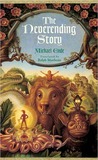
Review: The Neverending Story

The Neverending Story The Neverending Story by Michael Ende
My rating: 5 of 5 stars

WOW! Just wow! This book completely took me by surprise! I was impressed by the movie version of The Neverending Story as a child but it didn't move me enough to warrant repeated viewings or motivate me to seek out the source material.

For nostalgia I recently re-watched the movie and was disappointed by how poorly it had aged. This time, however, it DID inspire me to give the book a read and I'm so glad that I did! It turns out that the movie really comprises only the first act of the much longer book.

This book is, literally, fantastic. It is a sweeping epic journey with enchanted worlds, magical characters, and mythical creatures. Most characters are fleeting yet the book is written such that you still care about them even without pages and pages of development. Somehow The Neverdending Story manages to use these brief encounters to build a much richer universe, leaving the reader's imagination to fill in the details with, "But that is another story and shall be told another time."

The epic story is underpinned by themes of self efficacy, self image, and destiny. In many ways it reminds me of a much longer, more detailed version of Coelho's The Alchemist. It goes a step further, though, and adds "meta" themes of human fantasy and escapism. This meta commentary doesn't QUITE hit its mark for me - I think its reach exceeds its grasp a little - but it doesn't in any way detract from the rest of the story.

The most impressive aspect of The Neverending Story for me is that it is translated to English from its original German. It features so many charming character descriptions, clever turns of phrase, and even rhyming verses of poetry/song that its translation must have been an incredible labor of love. The end result is, well, fantastic, but I admit that it has me yearning to learn (I feel the yearn - the yearn to learn!) German just to be able to read the original source material.

Bryan's great adventures learning German . . . but that is another story and shall be told another time!

View all my reviews

2017-04-10

Review: The Rational Optimist: How Prosperity Evolves

The Rational Optimist: How Prosperity Evolves The Rational Optimist: How Prosperity Evolves by Matt Ridley
My rating: 2 of 5 stars

THE GOOD:

Ridley's first and most consistent argument is that specialization (the ability of one person or organization to do one thing while another does another thing) and exchange (the ability to trade the products of those two things) set humans apart from other animals and enable growth / prosperity because the whole us greater than the sum of the parts. He provides a great deal of evidence for this position and his argument is quite compelling.

His second argument is that time and again humans have found ways to overcome dire threats to their well-being, hence the cause for the optimism in the title. He also argues that government regulation by and large interferes with economic growth (through specialization and exchange) and inhibits human innovation (which we need to overcome all of those dire threats).
These arguments are cogent and, if the book had stopped here, I would have given it a higher rating.

THE BAD:

Ridley goes a step further, though, and effectively argues that, because humans have a long tradition of overcoming threats, we shouldn't concern ourselves with said threats. I take umbrage with this kind of fatalism and counter-argue that concerning ourselves with said threats is exactly HOW we keep overcoming them - but them I'm an entrepreneur while he is a [minor] British noble heir so he and I may have very different ideas about self efficacy and agency.

The author also contradicts himself frequently when convenient for his arguments. For example, in one section, he demonstrates how foolhardy it would have been to extrapolate trends from pre-industrial-revolution economies into the 20th century. The industrial revolution changed the rules of the game dramatically such that some things that had previously been linear became exponential.

Yet, when arguing against the seriousness of some current threats - like climate change - he extrapolates trends from long ago to support his point. Not only is this fallacious and hypocritical, it seems willfully ignorant in his particular case: Ridley was Chairman of the first English bank to go insolvent in 150 years at the outset of the 2007 financial crisis. If anyone should understand the folly of making decisions on anachronistic data, it should be he!

As another example, he cites multiple reasons (high cost, inconsistency of production, etc.) why green energy technologies are inferior to fossil fuels (Ridley has been accused of a conflict of interest in Parliament due to his investments in the coal industry.). However, he spends chapters describing how humans invariably overcome exactly those types of challenges. Indeed it is instructive to read this 2010 book through the hindsight of 2017 as we have seen innovations drive down the costs of green energy technologies substantially. He should listen to his own advice and be optimistic!

THE UGLY:
Ridley's worst offense in this book is a liberal use of the straw man fallacy. He portrays all environmentalists, for example, as being anti-growth and anti-technology. He also frequently uses impractical biofuels as a green energy punching bag as if they are the only alternative to fossil fuels. His data are quite selective and he introduces false dichotomies, e.g. between combating climate change and combating malaria.

CONCLUSION:
This book started out well and then really fell apart for me. It's almost as if Ridley had a good concept for the first few chapters but then was compelled by his publisher to stretch it into a longer book. In doing so, he introduced many logical fallacies and made proclamations that haven't held up even just a few years after publication. That said, it was an interesting read - especially the beginning - but the content might be better suited for a TED talk than a 450-page book.

View all my reviews

2017-03-03

Review: Rogue One: A Star Wars Story

Rogue One: A Star Wars Story Rogue One: A Star Wars Story by Alexander Freed
My rating: 2 of 5 stars

I read this hoping for something that would fill in the gaps and plot holes of the movie (as the novelization of The Force Awakens did) but I was unfortunately disappointed. This book doesn't fill in any gaps or explain away any cinematic plat holes; it is essentially a direct, 1:1 translation of the movie plot.

The novel DOES spend more time attempting to explain the motivations of different characters by voicing their inner monologues but, combined with poor dialogue (also taken directly from the script), is no more effective to that end than the movie.

I'm forced to conclude that the story and characters of Rogue One are simply bad, regardless of the medium. In fact, if anything, the novelization makes the flaws of the movie all the more glaring as it is harder to hide unrelatable characters, unearned transformations, poor dialogue, manufactured conflict, and plot overconvenience without the distraction of beautiful cinematic visuals.

Ironically the only aspect of the movie that the novelization improves is the movie's best feature: the action. Some of the movie's best action can be confusing due to many different parties fighting simultaneously while the novel can explain exactly what (and why) each character is up to.

Finally, the writing leaves a lot to be desired. The author uses a voice that doesn't match at all with the tone of the story. He employs flowery language that, instead of giving the story gravitas, sounds like a middle schooler trying to impress his classmates with his vocabulary.

I can't really recommend this book to anyone but the most die hard Star Wars fan - and even then, only if your OCD needs to read it for "completion."

View all my reviews

2016-06-06

Book Review: Run With Power

Run With Power: The Complete Guide to Power Meters for Running

This is a really good first effort in the nascent world of running by power. There are three potential audiences for this book:

1. Triathletes who are already accustomed to cycling by power - this book "translates" cycling power principles and training guidelines to the world of running.
2. Runners who are already accustomed to running by heart rate - this book "bridges" the zones and methodology of running by [laggy] heart rate to those of [instantaneous] power.
3. Neophytes who don't yet have experience with power or heart rate training - this book offers a "primer" on power training terms and methodologies.

The book feels a little rushed in its [successful] attempt to be first to market. That said, it ushers the great work of Dr. Andy Coggan and Joe Friel into the world of running by power, which is very valuable. It introduces some new metrics that are particular to running by power and, perhaps most usefully, it includes detailed training plans for runners of varying experience levels to train for races of varying distances.

This field is advancing rapidly and I expect there to be other books on the market soon (and probably a second edition of this one) but, for the time being, this is the definitive work on running by power and is a must-read for anyone looking to incorporate power in training, racing, and injury prevention.

2012-08-19

Recommended Entrepreneurship Books

I made the following Entrepreneurship book recommendations on Quora so thought I'd share them here as well:


I use the following two books as course texts in my entrepreneurship course:

Effectual Entrepreneurship - Real data and evidence-based research on successful entrepreneurs

The Startup Owner's Manual - Steve Blank's step-by-step guide to launching a venture (annoyingly only available in hardback)

Additionally, I recommend the following books for additional reading:

Blue Ocean Strategy - Creating new markets instead of scrounging for shares of existing ones

Crossing the Chasm - Old school, seminal marketing work on moving from early success to sustainable growth

Getting to Yes - The best book I've ever read on negotiating

Do you agree with my recommendations? Do you have any others to contribute?

2009-06-20

Mixed Media

Last week marked several milestones for me regarding different forms of media:

1. I finished listening to the entire Jimmy Buffett discography chronologically and am now well prepared for the July 5th concert in London. Speaking of which, I still have an extra ticket for that show if any Parrot Heads are looking to join.

I've made my way through the "K"s and I'm now in Led Zeppelin, having just finished I and II. What a strong start they made onto the music scene!

2. I beat all the Military Madness levels as both the good Allies and as the evil Axis, so I now hold the title of Grand Strategy Pooba--at least by 1989 video game standards! If history is any evidence I probably won't play any video games again for a long time but this was a fun diversion for the last few weeks.

3. I watched The Kite Runner in lieu of reading the book. I'm sure the book was better but most reviews I read indicated that movie was pretty faithful to it. It was interesting--pretty well done.

4. I finished Malcolm Gladwell's Outliers, his third in a string of engaging, thought-provoking books. I question some of the causality in the cases he makes but they are interesting nonetheless and I would recommend this book. Reading it gave me pause for thought about the opportunities I have had and especially about the unique high school environment created for us at TJ. Fortune has definitely smiled on me throughout much of my life and I'm not sure I deserve it. All I can do is my best and hope that I live up to the extraordinary opportunities with which I have been blessed.

On another note, things are absolutely crazy at the Poken office these days. We have flown in our new Web interface development team for "war room" style productivity. This has effectively doubled our headcount--but of course we haven't increased our office space at all. Result: high entropy! "Chaos" might be a better word, but it seems to be productive. The new team members are nice and smart and a good addition to our existing uberteam.